Baseball Franchise Manager
- 3.4
- Rating
- 10.00K
- Installs
- Free
- Price

 Analysis by App-foxy
I approached Baseball Franchise Manager as the kind of mobile sports game I could open for a short session, make a few meaningful decisions, and return to later without needing to play every pitch myself. That expectation matters here. This is not presented as a traditional baseball action game where timing, throwing, or batting skill is the main attraction. Instead, it puts me in the general manager’s seat, with the focus on building and guiding a team through scouting, drafting, trading, training, and competition.
That management-first idea gives the game a clear identity. I am not simply choosing a team and watching results unfold; the appeal comes from deciding what deserves attention before the next game. Should I look for new talent, improve the players already on the roster, or make a trade that fixes a weakness now at the risk of reducing future flexibility? Those choices are the reason to keep returning. The experience is best understood as a compact baseball strategy game rather than a substitute for a full console-style baseball simulation.
Grand Pike AB is the developer behind this free sports game, which is aimed at an Everyone audience. It has reached over ten thousand installs and holds a 3.4 average from a little over a hundred ratings, so the public reaction is mixed rather than universally enthusiastic. I think that is a useful signal: the concept is easy to understand, but whether it becomes a satisfying long-term hobby depends heavily on how much you enjoy roster planning and gradual team building.
You May Also Like

 Blood Strike: 2.5 Anniversary
Blood Strike’s Loadouts Turn Every Drop Into a Tactical Gamble
A close look at Blood Strike’s custom loadouts: how fast access to signature weapons reshapes its battle royale rhythm, rewards preparation, and narrows the gap between fights.

 Pandora - Music & Podcasts
Pandora’s Music Is Easy to Start, but Harder to Recover
Pandora’s strength is its low-effort path from a seed to a station. Its weak spot is how much confidence it asks you to place in connection, setup, and quiet recovery.

 8 Ball Pool
 Is Built on Rivalries, Rematches, and Routine
A close look at the rivalries, rematches, shared routines, and unanswered safety questions that turn a quick pool match into a persistent mobile community.

 Samsung Music
’s Quiet Strength Is Playing What You Already Own
Its reach comes less from spectacle than from dependable access to a personal library. That simplicity is both the app’s strongest retention engine and its ceiling.

 AccuWeather: Weather Radar
AccuWeather Review: A Quick, Clear Forecast for Everyday Decisions
For everyday plans, the best forecast is the one you can understand quickly. AccuWeather makes rain timing, radar, and local conditions easy to act on, with a few trade-offs.

 Hill Climb Racing
Why Hill Climb Racing Still Turns Crashes Into One More Run
A tiny car, a bumpy hill and one more upgrade: Hill Climb Racing keeps resurfacing because its simple chaos makes every near-miss feel personal.
More From Our News Desk



How the current version feels to play
I find the current version easiest to enjoy when I treat each visit as a small front-office check-in, not a demand to overhaul the whole club. I can review what needs attention, make one considered choice, and leave with a clearer plan for the next session. That steady rhythm also makes it easier to notice which parts of managing a baseball team I actually enjoy.
A general manager role that works best in short, deliberate sessions
The strongest part of the design is the change in perspective. Baseball Franchise Manager asks me to think in terms of a franchise rather than a single match. A game result matters, but it is only one piece of a longer chain of decisions. Scouting can influence who I pursue, drafting can shape the future of the club, trades can address immediate problems, and training can help me get more from the players I already have.
I found that structure more enjoyable when I resisted the temptation to change everything at once. A common mistake in management games is to react to every poor result with a major roster move. Here, a more disciplined approach makes sense: identify the weakest area, make one adjustment, and then see whether the team improves. That workflow turns the game from a sequence of random clicks into a small experiment in team construction.
The game is particularly suitable for someone who likes sports statistics and planning but does not necessarily want to control every at-bat. It can fit into a commute, a break, or an evening when I want a strategic activity without the concentration demanded by a real-time sports game. The trade-off is that players looking for direct batting and pitching action may find the experience distant. The manager’s office is the main playing field.
Why the franchise loop is more interesting than the individual match
The individual result is most useful when I treat it as feedback. A win can confirm that a lineup is working, while a loss can expose a weak position, an unbalanced roster, or a training decision that needs reconsideration. I would not recommend judging the game only by whether each simulated outcome feels exciting. Its value comes from connecting results to decisions over time.
One practical way to play is to set a simple priority before each session. I might focus on strengthening the current lineup, preparing for the future through scouting and drafting, or trying to reshape the roster through trades. Keeping one priority prevents the management screen from becoming a checklist. It also makes the consequences of each decision easier to understand.
Another useful habit is to avoid treating every promising player as an immediate solution. A prospect may be valuable because of future potential, while an experienced player may be useful because the team needs stability now. That tension is where the game’s management idea becomes meaningful. I get more satisfaction from deciding which kind of value my team needs than from collecting names without a plan.
Scouting, drafting, trading, and training are not interchangeable
The four main activities suggest different time horizons. Scouting is about information and preparation. Drafting is about committing to a player who may help later. Trading is the quickest way to alter the roster, but it can also undermine a longer plan. Training is more gradual and rewards patience with the players already under contract. Thinking of them as separate tools is more productive than using whichever option happens to be available first.
For a new player, I would begin by observing the team’s needs before spending resources on ambitious changes. If the roster has several similar strengths but one obvious weakness, a targeted move should be more valuable than a broad rebuild. If the team is already competitive, training and careful drafting may be safer than repeatedly trading away useful pieces. This is a small but important distinction: the best decision depends on whether I am repairing, competing, or rebuilding.
The game’s free-to-play structure also makes this decision-making style important. The title costs nothing to download, but optional purchases range from $1.99 to $104.99 per item. I would advise treating purchases as a personal limit question rather than assuming they are necessary for enjoyment. Anyone who dislikes progression systems with optional spending should decide that boundary before becoming invested in a franchise.
What the version and release history tell me
The game was released on June 21, 2023, and the current version is 1.0.56. That version number indicates an app that has moved beyond its initial launch build, but I would not automatically interpret it as evidence of a complete redesign or a particular set of improvements. The safest conclusion is simply that the current build is the one prospective players should evaluate, rather than relying on impressions from the earliest release period.
For existing users, a current version can matter because management games depend on balance and consistency. Small changes to progression, team strength, or the way decisions are presented can affect how a long-running franchise feels. I would therefore make a habit of checking the in-game experience after updating, especially if I have an established team whose strategy depends on a particular roster balance. The version number is useful context, but it does not replace personal testing.
The minimum operating-system requirement is Android 7.1, which gives the game a fairly broad compatibility range for Android users. That is helpful if I am using an older device and want a management game that does not demand the newest phone. Still, compatibility alone says little about comfort. On a smaller or slower handset, menus and repeated roster decisions may feel less convenient than they do on a newer screen.
How it affects someone already playing
If I were already committed to a franchise, I would judge the current build by three questions. First, do my roster decisions still feel understandable? Second, can I tell why the team is succeeding or struggling? Third, does the long-term plan remain more rewarding than simply chasing the next result? Those questions are more revealing than the presence of a new version number by itself.
Players who enjoy gradual progress should find the manager viewpoint familiar even if they have not played this particular title before. The game gives them a reason to return because the roster is not static. There is always a potential decision between improving the present squad and preparing for what comes next. That is the core retention loop, and it does not depend on direct control of the action.
However, existing users who prefer immediate clarity may become frustrated if a result feels disconnected from their choices. Management games need to make cause and effect readable. If I cannot tell whether a trade, training choice, or draft decision actually helped, the strategic layer loses much of its appeal. My recommendation is to change one major variable at a time and keep informal notes about the team’s weak spots. That makes the experience easier to evaluate, even when the game itself does not give me every explanation I want.
Where the experience still has limits
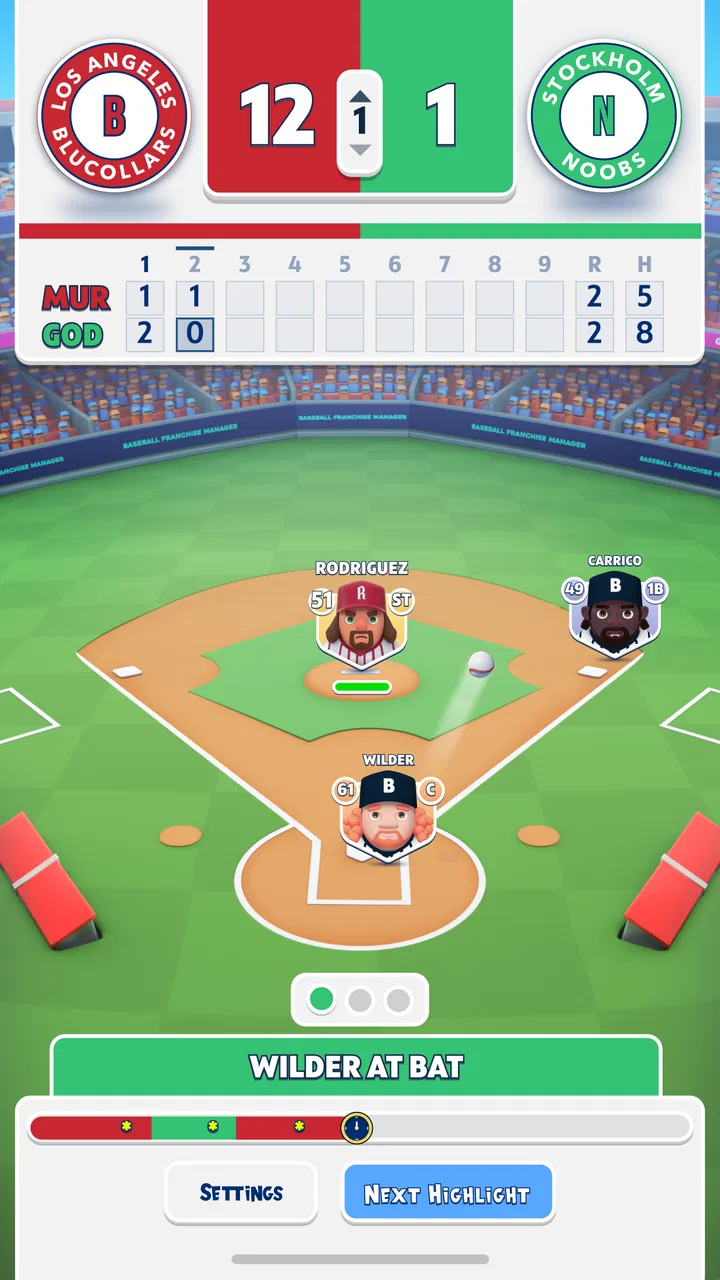
The most obvious limitation is the narrowness of the central fantasy. Baseball Franchise Manager is built for people who want to run a team. It is not the right choice if I want to step onto the field, swing the bat manually, pitch through a difficult inning, or experience a visually rich match presentation. A conventional baseball action game will be better for those needs, while a deeper desktop management simulator may suit someone who wants extensive statistics, detailed contracts, and a larger number of interconnected systems.
The middle ground can be appealing, but it also creates expectations. A player may download it because of the baseball label and then discover that the enjoyment comes from planning rather than performance. I would tell a friend to decide which side of that divide they prefer before installing it. The free entry makes trying it easy, but the time investment is still real if I begin building a franchise seriously.
The mixed 3.4 average rating also suggests that the game will not satisfy everyone equally. I would not read that score as a verdict that the concept fails. Instead, it points to an experience with a specific audience and possible friction points. People who enjoy management decisions may overlook a modest presentation or a slower pace, while players expecting polished on-field excitement may judge it much more harshly.
Optional purchases are another point to consider. The wide range between the smallest and largest listed item means spending can become a meaningful part of the experience for users who choose to buy. I prefer approaching the game with a fixed rule: play the free version long enough to decide whether the management loop itself is enjoyable, and do not spend simply to solve impatience. If the roster-building decisions are not fun without purchases, spending more is unlikely to fix the underlying mismatch.
Practical ways to get more from a new franchise
My first recommendation is to create a short-term and long-term objective at the same time. For example, I might identify one roster weakness to address immediately while also reserving attention for a future draft. This prevents the common trap of sacrificing every future option for a quick improvement. It also gives scouting and drafting a purpose instead of making them feel like isolated menus.
Second, I would use trades as targeted repairs rather than constant reshuffling. A trade should answer a specific question: what problem am I solving, and what am I giving up? If I cannot answer both parts, waiting may be wiser. This approach is especially useful for players who tend to react emotionally after a losing streak. A bad result is information, not automatically a reason to dismantle the team.
Third, I would judge training by role and timing. Improving a player is more valuable when that player fits the team’s actual plan. Training everyone equally may feel fair, but concentrating effort where it supports the lineup can produce a clearer strategic identity. The trade-off is that specialization can leave another area exposed, so I would reassess the roster after meaningful changes rather than assuming one improvement solves the whole team.
Finally, I would keep sessions focused. A useful routine is to review the roster, choose one priority, make the smallest sensible adjustment, and then return after seeing how the team responds. That rhythm makes the game feel like management rather than maintenance. It also helps me decide whether I genuinely enjoy the decisions or am only continuing because I have already invested time.
Who should try it, and who should skip it
I would recommend this game to baseball fans who enjoy building a club over time, comparing options, and accepting that a good decision may take several results to prove itself. It is also a reasonable pick for mobile players who want a free sports strategy game that can be played in short bursts. The Everyone age rating makes it approachable for a broad audience, although the management focus still requires patience and curiosity.
I would steer away from it if my priority were direct action, licensed-style spectacle, or maximum statistical depth. I would also skip it if optional purchases make me uncomfortable in any free-to-play game, particularly because the listed purchase range reaches well beyond a casual impulse buy. A paid or more traditional management alternative may be a better fit for someone who wants a clearly defined, one-time-cost experience, while a full baseball action title is preferable for hands-on play.
For a realistic everyday scenario, imagine having fifteen minutes before an appointment. I could open the game, inspect why the team is underperforming, decide whether to train an existing player or explore a trade, and leave with a clear next step rather than needing to complete a full match. That is where the format makes sense. On the other hand, if I have only enough time for one quick burst of action and want immediate excitement, the management loop may feel too slow.
What I would watch as the game continues
For future use, I would pay attention to how clearly the game communicates the effects of management choices. A healthy long-term experience should help me understand why a player is valuable, what a roster lacks, and whether a change improved the team for the right reasons. I would also watch how the balance between free progression and optional purchases affects ordinary play, since that relationship can determine whether the game feels strategic or pressured.
I would also look for continued attention to the current version’s usability. A management game benefits greatly from readable information, quick navigation, and decisions that do not require unnecessary repetition. Even without adding a new feature, improving the path from roster review to action could make the existing systems more satisfying. Those are the areas most likely to affect whether a new player stays beyond the first experiment.
My final view is cautiously positive. Baseball Franchise Manager has a focused idea and gives me a reason to think like a team builder rather than an athlete. I appreciate the distinction between scouting, drafting, trading, and training, especially when I use them with different time horizons. The experience is less convincing for anyone seeking direct baseball action, deep simulation detail, or a completely frictionless free-to-play structure.
At no cost to start, it is easy to test whether the manager role suits me. I would begin slowly, set a spending boundary, and judge the game by the quality of its decisions rather than by a single win or loss. If building a roster and watching a plan develop sounds more appealing than controlling every play, this is worth trying. If I want to feel every swing and pitch, I would choose a different kind of baseball game instead.
FAQs for Baseball Franchise Manager
01What is Baseball Franchise Manager?
Baseball Franchise Manager is a baseball simulation and management game focused on running your own professional team. Instead of controlling every pitch directly, you make important front-office decisions such as building the roster, managing contracts, developing prospects, setting lineups, and planning long-term strategy. It is designed for players who enjoy statistics, team building, and the challenge of guiding a franchise through multiple seasons.
02How does gameplay work in Baseball Franchise Manager?
Gameplay revolves around making decisions before and during a season rather than relying mainly on arcade-style action. You can evaluate player abilities, create lineups, manage pitching rotations, negotiate contracts, scout new talent, and respond to injuries or changes in form. Matches are generally experienced through simulations and results, so success depends on preparation, roster balance, financial planning, and adapting your strategy to each opponent.
03Can I play Baseball Franchise Manager offline?
Offline availability may depend on the version of the app and the specific feature you want to use. Many management actions and previously loaded game content may work without a constant connection, but online services, updates, leaderboards, cloud synchronization, advertisements, or certain account features can require internet access. It is best to check the store listing and test the game after installation before relying on it for completely offline play.
04Is Baseball Franchise Manager free to download?
Baseball Franchise Manager may be available as a free download, although the exact pricing model can vary by platform and region. A free version can include advertising, optional purchases, premium content, or restrictions on some features. Before downloading, review the Google Play or App Store listing carefully, especially the in-app purchase information, so you understand whether additional spending is necessary for a complete management experience.
05Is Baseball Franchise Manager suitable for beginners?
The game can be enjoyable for beginners, but players unfamiliar with baseball management simulations may need time to understand statistics, contracts, player development, and tactical decisions. The interface and menus are easier to learn when you begin with a structured approach: review the roster, follow recommended lineups, avoid overspending, and make gradual changes. Fans of detailed sports strategy will likely appreciate the depth more quickly than casual arcade players.
Pros
- Deep roster management with trades
- contracts
- scouting
- and player development.
- Realistic season simulation lets you manage games without playing every pitch.
- Multiple strategic options for lineups
- pitching rotations
- and franchise building.
- Detailed statistics help evaluate players and make informed management decisions.
- Suitable for long-term play
- with challenging goals beyond a single season.
Cons
- The interface can feel dated and takes time to learn for new players.
- Simulated games may feel less exciting to users seeking hands-on baseball action.
- Progress can become slow when managing several seasons in one sitting.
- Some advanced features may require patience to understand and use effectively.
- The experience is mainly text and statistics
- with limited visual presentation.

Baseball Franchise Manager
Gallery